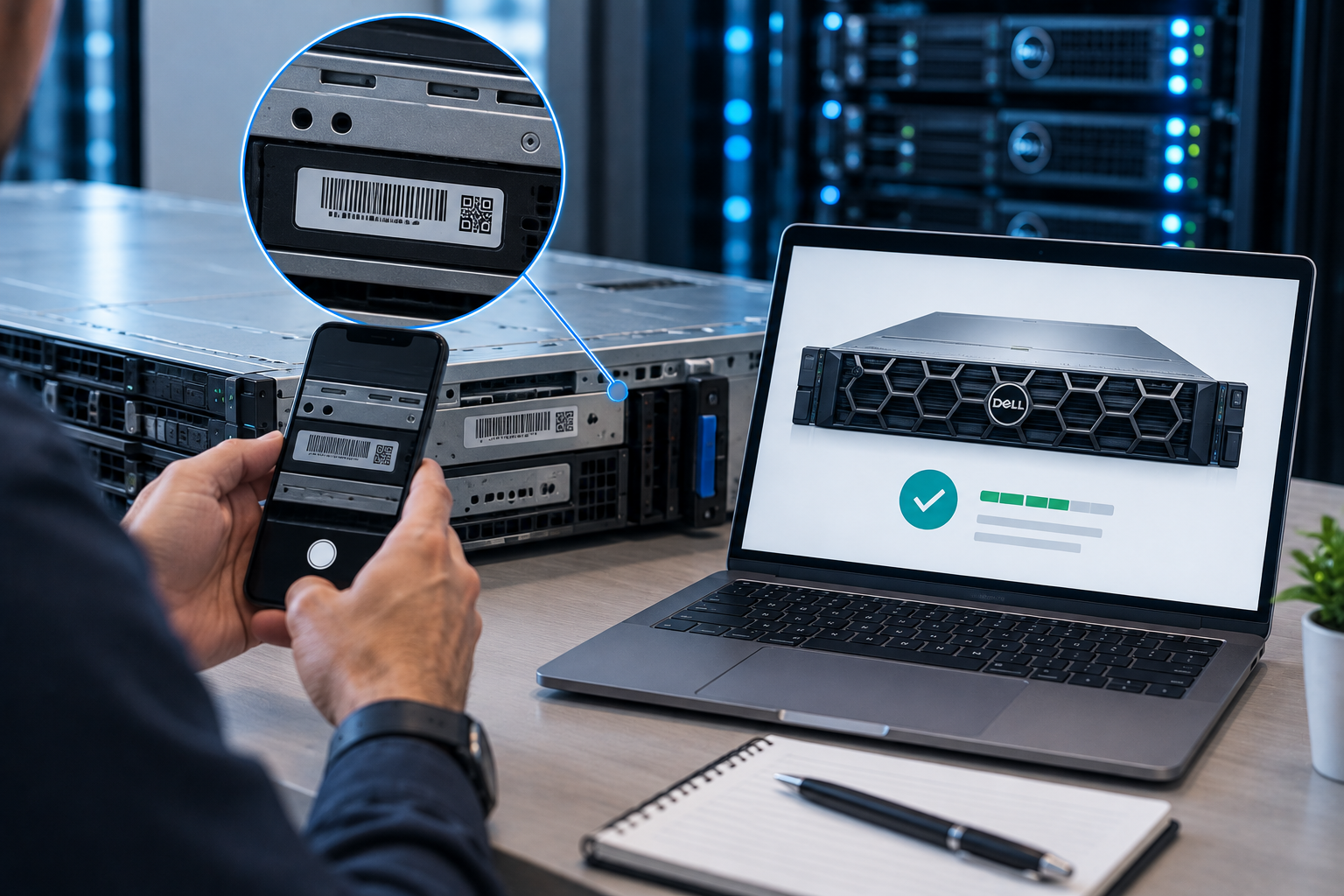
The short answer: choose a tower server if you need one or two servers, have no comms cabinet and the server will sit in an office or cupboard. Choose a rack server if you already have, or plan, a cabinet for your network equipment, expect to add servers or storage, or want everything in one secure, cooled space. Processor, memory and storage options overlap heavily between the two; the decision is mostly about where the server lives.
What actually differs
| Tower server | Rack server | |
|---|---|---|
| Where it goes | Floor or desk, office or cupboard | A 19-inch rack or comms cabinet |
| Noise | Usually quieter, designed to sit near people | Usually louder; fans are sized for dense cabinets |
| Space as you grow | Each server takes more floor space | Servers, storage, switches and UPS stack in one cabinet |
| Extra kit needed | None | A rack or cabinet, rails and ideally cable management |
| Typical fit | A first server, a branch office, file sharing, a small line-of-business application | Several virtual machines, shared storage, a growing estate |
HPE ProLiant and Dell PowerEdge models in each form
Tower servers
- HPE ProLiant MicroServer Gen11: ultra micro tower, one processor, up to 128GB of memory. Built for small offices and branches.
- HPE ProLiant ML30 Gen11: 4U tower, one Intel Xeon E-2400 processor, up to 128GB.
- HPE ProLiant ML350 Gen11: 4U tower with two processor sockets. A rack conversion kit (P47394-B21) turns it into a 5U rack server later, which makes it a safe choice if you might move to a cabinet.
- Dell PowerEdge T160, T360 and T560: the T160 is a compact single-processor tower, the T360 a larger single-processor tower, and the T560 a two-socket tower.
Rack servers
- HPE ProLiant DL20 Gen11: 1U, short-depth, one Intel Xeon E-2400 processor. Fits shallow comms cabinets.
- HPE ProLiant DL320 Gen11: 1U, one Intel Xeon Scalable processor.
- HPE ProLiant DL360 Gen11: 1U, two processors, for dense virtualisation.
- HPE ProLiant DL380 Gen11: 2U, two processors, with the most room for drives and expansion cards.
- Dell PowerEdge R260 and R360: 1U single-processor rack servers; the R260 is short-depth.
Model details change between configurations, so check the vendor QuickSpecs or specification sheet for the exact build you're buying.
Five questions to decide
- Do you have a cabinet? If your switches already live in one with space and ventilation, a rack server belongs there.
- Where will people sit? A rack server in an open office is usually too loud. A tower is designed for it.
- How many servers in three years? If the answer is more than two, a cabinet and rack servers save space and cabling.
- Can you reach it? For a server you won't visit often, remote management matters more than the form factor. HPE's iLO and Dell's iDRAC work the same in both; see what an iLO Advanced licence adds.
- What protects it? Budget for a UPS either way, and for a cabinet with rails if you go rack.
Buying through Apaxon
At the time of writing (September 2026), Apaxon holds HPE ProLiant MicroServer, ML30 and ML350 Gen11 towers and DL320, DL360 and DL380 Gen11 rack servers, with live prices and stock in the store: browse tower servers, rack servers and racking and cabinets. Dell PowerEdge servers are configured to order: request a Dell server quote, with installation and configuration delivered by Dell and Arrow. Still deciding between vendors? Read HPE ProLiant vs Dell PowerEdge.
Sources
Get the latest IT insights
Expert tips, infrastructure news, and product updates — delivered weekly.