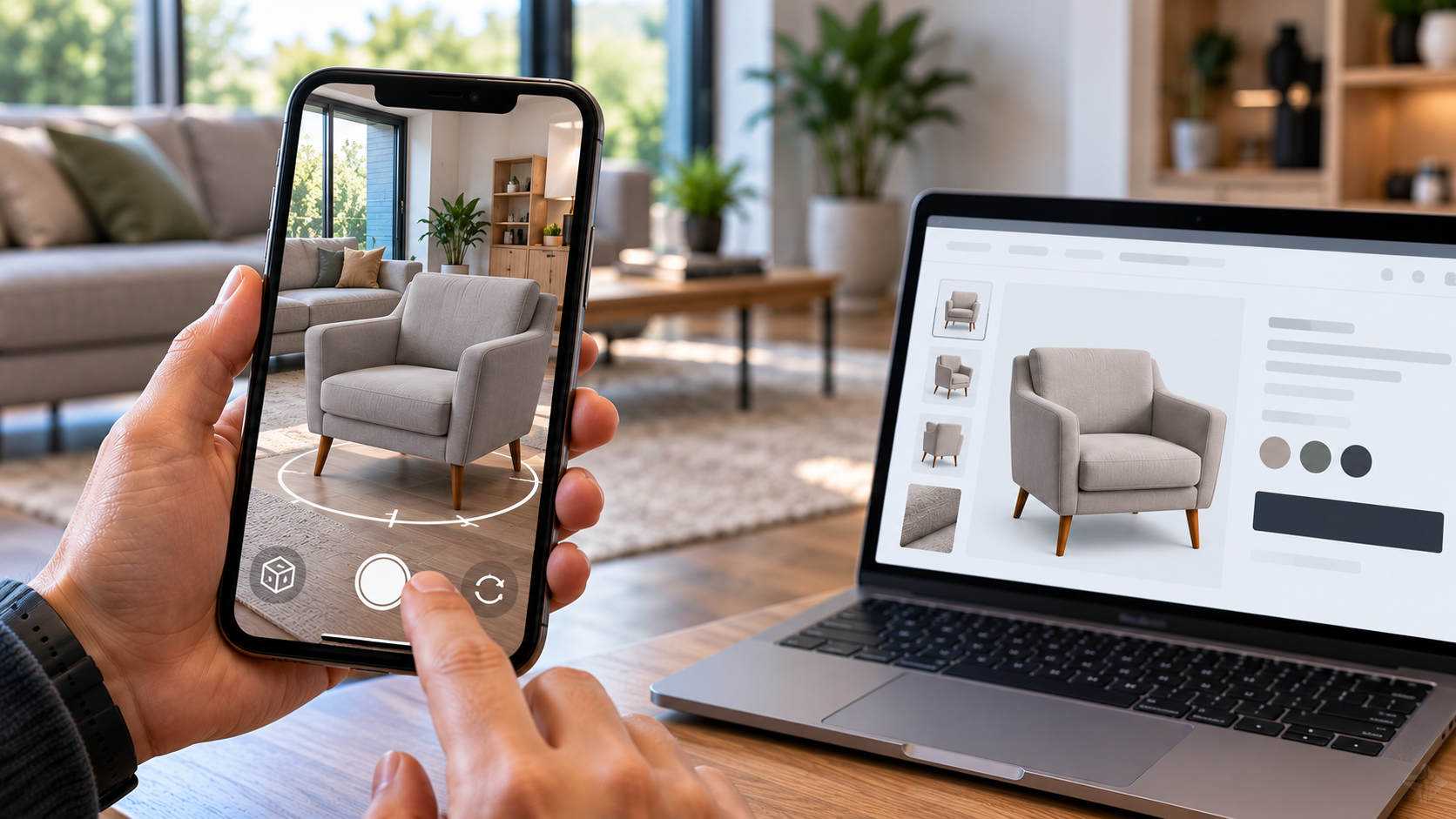
There is one question a product photograph cannot answer, and it is the question that stops people buying expensive things: will this fit the space I have?
Why photographs run out of road
Every image on a product page is scaled to the page. A range cooker and a kettle occupy the same rectangle of screen. Dimensions in a specification table help a little, but reading "900mm wide" and judging whether that works beside your existing units are different mental tasks, and most people are bad at the second one.
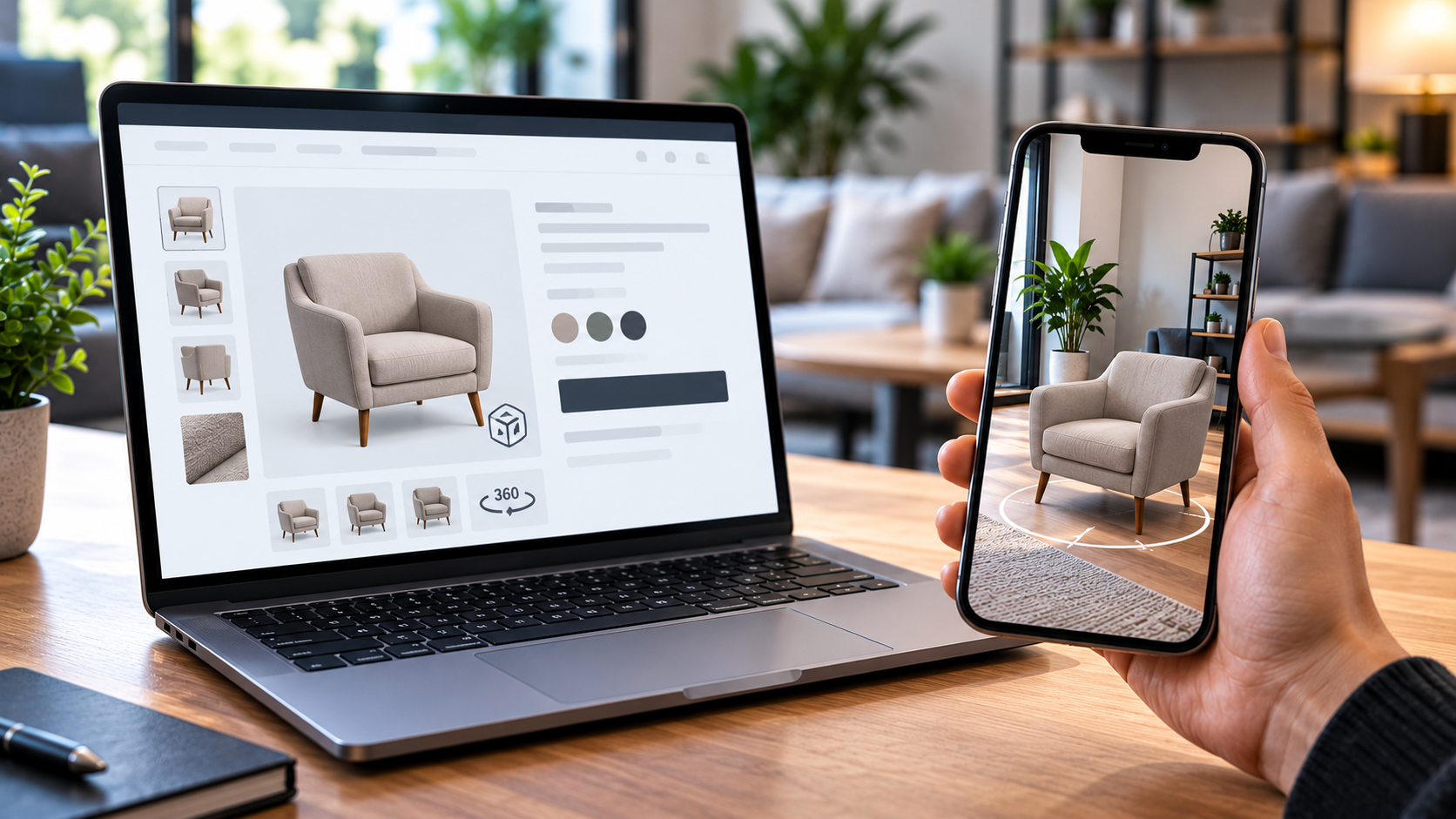
A 360-degree spinner does not solve it either. It shows the product from every angle — still at the size of your web page. Augmented reality is a different proposition: it stands the product in the customer's own room, at its true physical size, next to their own furniture, doorways and vehicles.
Where this pays, concretely
Furniture, appliances and flooring
A customer holds up their phone in their own kitchen and stands the range cooker in the gap it has to fill. They see it against their own units, in the finish they chose, at the size it genuinely is. The commercial effect is fewer returns — and specifically fewer of the expensive ones: the items that come back because they were bigger, darker or bulkier than the picture suggested.
Machinery, before the order is placed
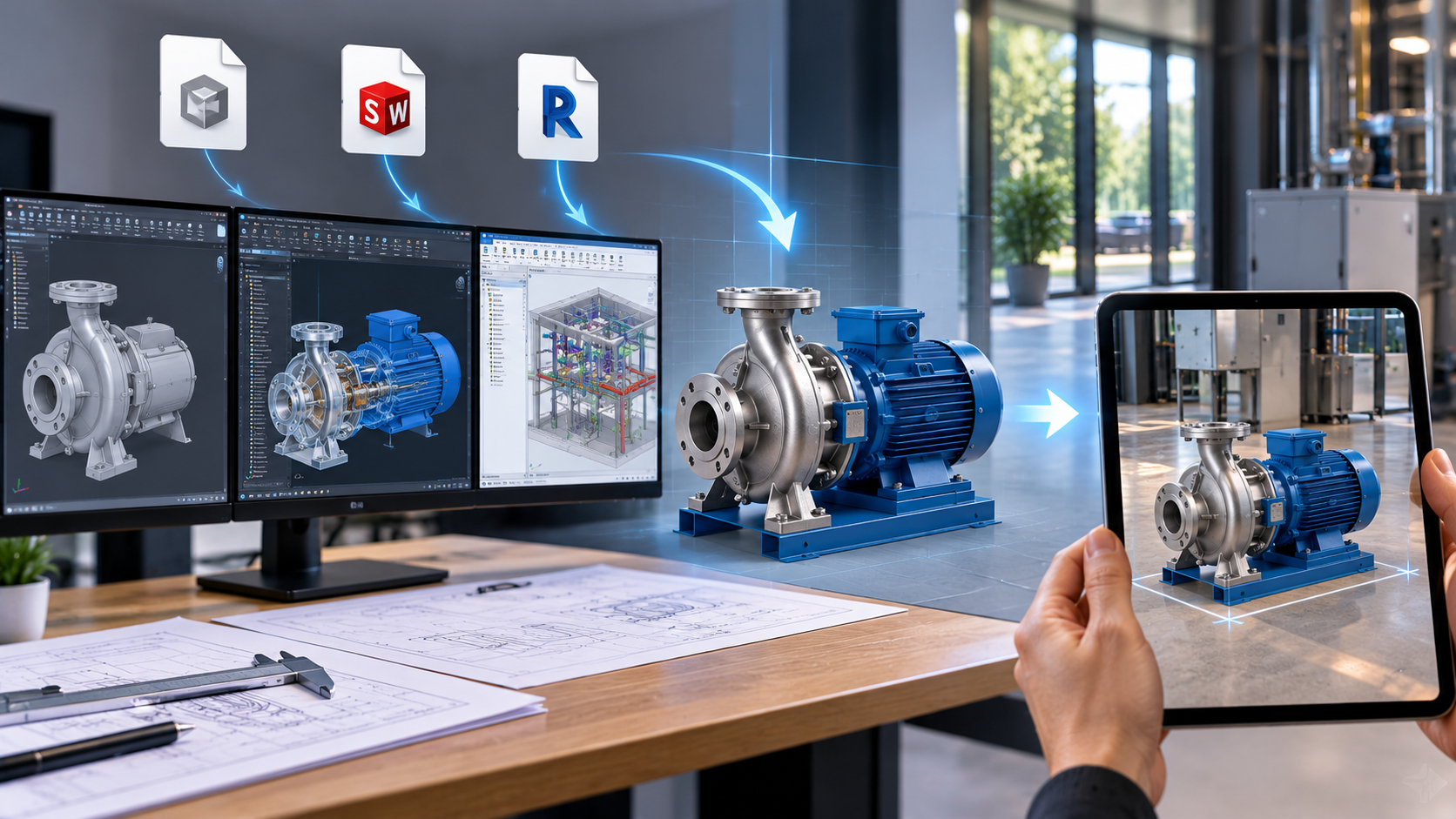
Footprint, working clearance, door widths and the route in from the loading bay. A buyer can walk around a full-size machine standing on their own concrete and check it against the three things a drawing never quite settles. The saving here is not a return — it is a specification error caught at quotation rather than on delivery day, when the machine is on a lorry and the doorway is still too narrow.
Clinical equipment planning
Imaging units, beds, chairs and trolleys placed in the real bay or treatment room. Clinical staff can check turning circles, access either side of a bed and clearance for a hoist without a supplier visit or a site survey. That means fewer abortive site visits, and fewer procurement decisions reversed after installation, when changes cost the most.
Kitchens, modular buildings and fit-outs
Stand a proposed island unit, cabin or storage system on the actual slab. For developers and specifiers it turns a plan drawing into something a non-technical client can judge for themselves, in the meeting, on the day.
The pattern worth noticing
In every one of those cases the value is not that AR looks impressive. It is that a decision which used to need a site visit, a survey or a leap of faith can be made by the person holding the phone, at the moment they are deciding.
| Without AR | With AR |
|---|---|
| Dimensions in a table the buyer has to interpret | The product standing in the space, at size |
| Doubt resolved by a site visit, or not at all | Doubt resolved on the product page |
| Wrong-size items discovered on delivery | Wrong-size items discovered before ordering |
| Non-technical clients reading a plan drawing | Non-technical clients looking at the thing |
Which products justify it
Be selective. AR earns its cost where at least one of these is true: the product is large or awkward, it is expensive enough that buyers hesitate, it comes in several finishes or configurations, returns are costly to you, or your sales process currently involves a site visit to answer a question about space. If none of that applies — a product that is small, cheap and sold in one version — good photography is probably the better investment.
It does not need a new website
A common objection is that this means replatforming. It does not: the viewer is a single embed that drops into the product page you already have, alongside the photographs. That is covered in adding a 3D and AR viewer to the website you already have, and the mechanics of the AR itself in WebAR explained.
You can try working demonstrations on the Apaxon augmented reality page — including a configurator that changes specification and carries it into AR. If you sell something large, ask what it would take to put it in your customers' rooms.
Get the latest IT insights
Expert tips, infrastructure news, and product updates — delivered weekly.