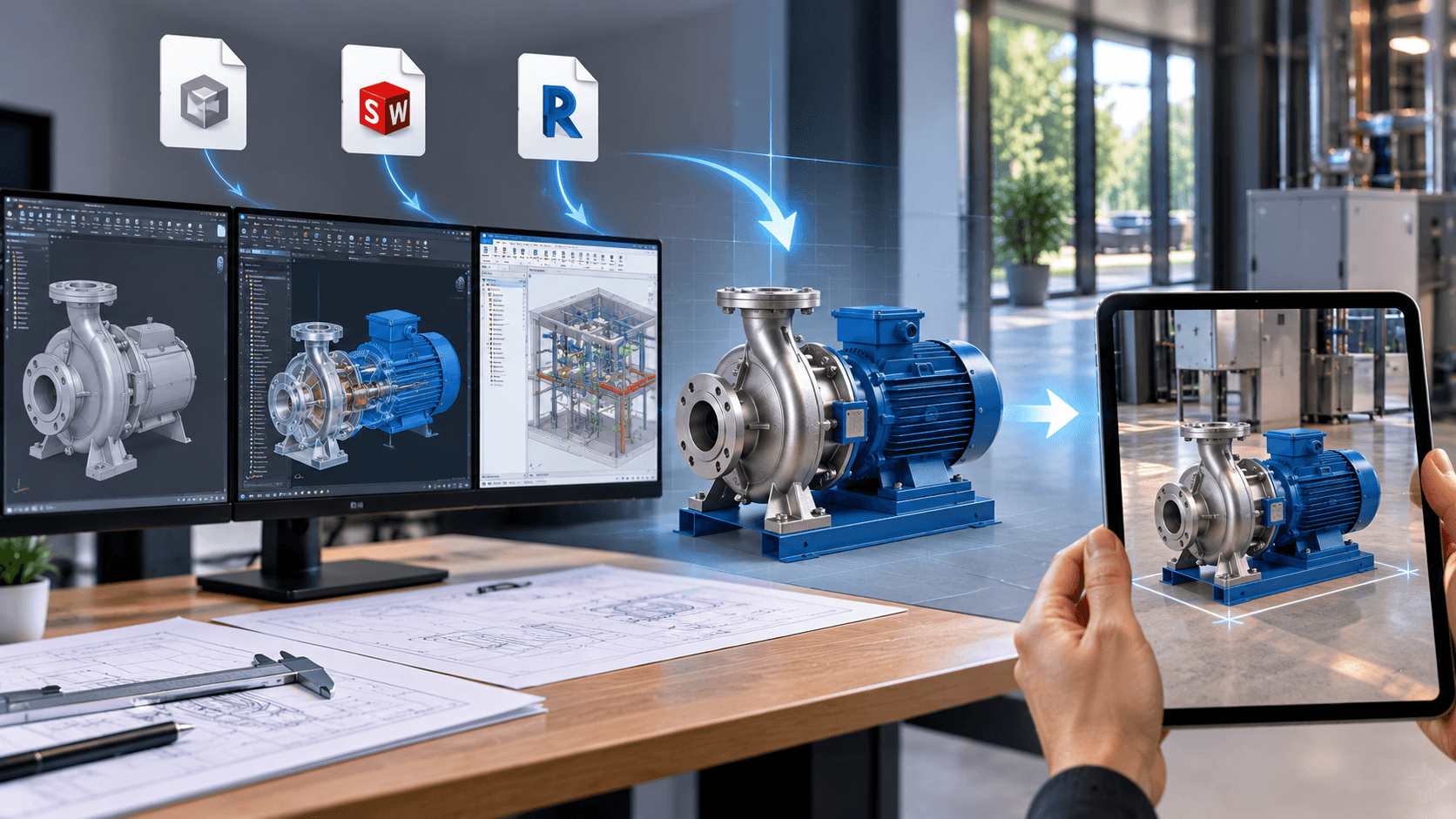
Augmented Reality

Let customers see it in their own space, before they commit

Augmented reality is built into the phone in your customer’s pocket. We connect it to the website you already have, so they can stand your product in their room, their yard or their workshop — at its real size, in the exact specification they picked. No app. No app store. Just a button on a page.

True-scale placementRuns in the browserColour & spec variantsWorks with your CAD filesNo licence fees

Where it reaches

iPhone & iPad

Opens through Safari's own AR view. Works on most devices from 2015 onward.

Android

Opens through Chrome on any handset with Google Play Services for AR.

Desktop & older phones

Fall back to an interactive 3D viewer — nobody sees a broken button.

No app, no store listing

It is a link on your existing website. Nothing to install, nothing to approve.

The AR itself is a feature of iOS and Android, and the viewer we build on is open source. There is no platform fee and no charge per view.

Live demo

Try it now, on a product from our own store

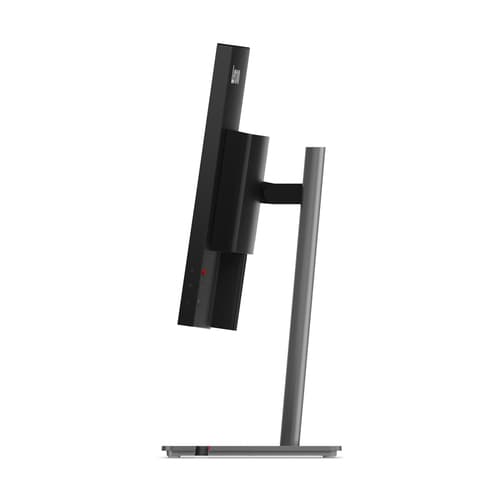
This is not a video of someone else’s product. It is a real monitor from the Apaxon catalogue, built to the dimensions on its own spec sheet, and served from our infrastructure. On an Android phone you can stand it on your desk. On a computer or iPhone you can turn it over and look at it.

Philips 34E1C5600HE

34-inch curved ultrawide, 3440 x 1440 WQHD, USB-C. Built to 808 × 381 × 111 mm — the measurements from its own spec sheet.

About 1 MB, loaded only when you ask for it.

808 mm wide381 mm panel111 mm deepSee the product →

On an Android phone, tap the AR icon once the model loads to place it in your room at its real size. This is the same pipeline we would build around your products — your dimensions, your models, on your own domain.

For fashion retailers

Build the whole outfit before buying any of it

A product photo shows one garment on its own. It cannot answer whether that red shirt works with those trousers and those shoes — which is one of the few reasons for a return that better photography will never fix. Change any piece and the rest stays put.

Outfit configurator

One model, three recolourable pieces — 180 combinations, with nothing further to download once it has loaded.

ShirtChilli red

TrousersIndigo

ShoesBlack leather

Every swatch is a colour the retailer actually stocks, so nothing can be configured that cannot be bought. The mannequin is deliberately abstract — this demo is about how the colours sit together, and a real garment model drops into the same three slots without any change to the page.

For garages and dealers

Let the customer point at the problem

“It makes a noise at the front” books the wrong job and costs a bay for the morning. Here the customer walks around the car, taps the part and sends an enquiry that already names it — with the symptom attached.

Vehicle inspector

Turn the car, tap any of the 7 marked parts — under the bonnet, on the wheels and underneath — then send the enquiry.

Under the bonnet

Wheels and brakes

Underneath

Pick a part from the list, or tap a marker on the car.

The markers are pinned to the model, not drawn over it, so they stay on their part as the car turns and hide when it rotates away. Swap in the client’s own vehicle and parts list and the page is unchanged.

For home improvement installers

Let them build it on their own house, before you drive there

Nobody can picture a three-and-a-half metre structure on the back of their own house from a photograph of somebody else’s. That is why the home visit exists — and the home visit is the most expensive thing in an installer’s cost base. This does not replace it. It means the visits that do happen are to people who have already chosen a style, a roof and a colour, and have seen the price move as they did it.

Conservatory configurator

Four roof styles, four sizes and four finishes — 3,456 configurations, each one placeable in a real garden at its real size.

Roof styleVictorian

Size3.5 × 3.5 m

Roof finishGlass

Sealed units with a solar coating. The brightest option, and the one that needs blinds in July.

Frame colourWhite

Side glazingClear

BrickworkRed facing brick

Indicative price

£15,400

Supplied and installed, excluding VAT and groundworks.

Victorian3.5 × 3.5 mGlass roofWhite frame

Example figures only. They show how a configurator can price in real time — they are not a quotation, and Apaxon does not sell conservatories. A live build prices from your own matrix.

Where it works

It isn’t a gimmick. It answers the question that stalls the sale.

Almost every expensive physical purchase pauses on the same doubt — will it fit, and will it look right where it’s going. Photographs can’t settle that, because they are always scaled to the page. Augmented reality settles it in about ten seconds, in the buyer’s own space, using the phone they are already holding.

Retail & homeware

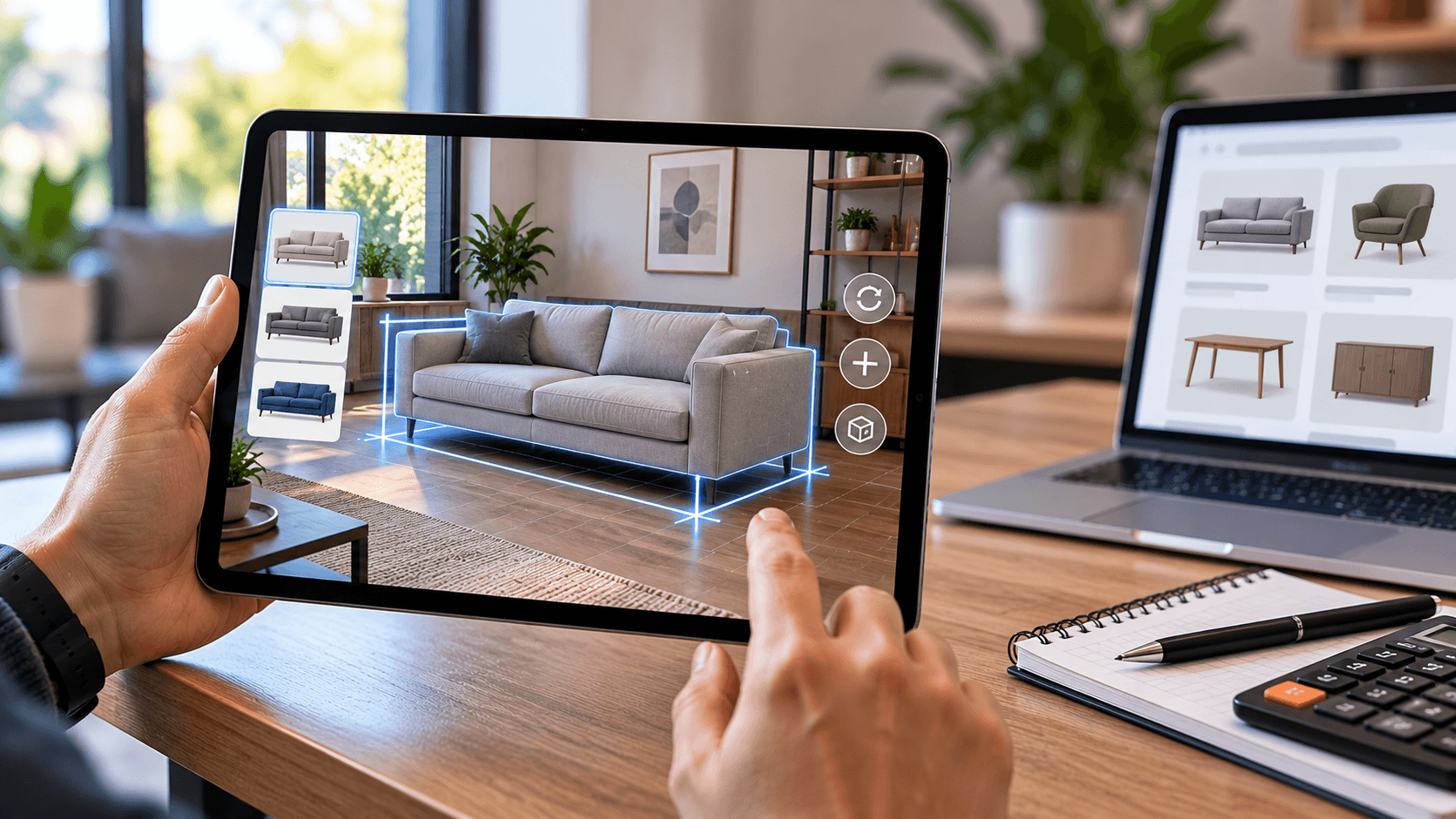
Furniture, appliances and flooring, placed in the actual room

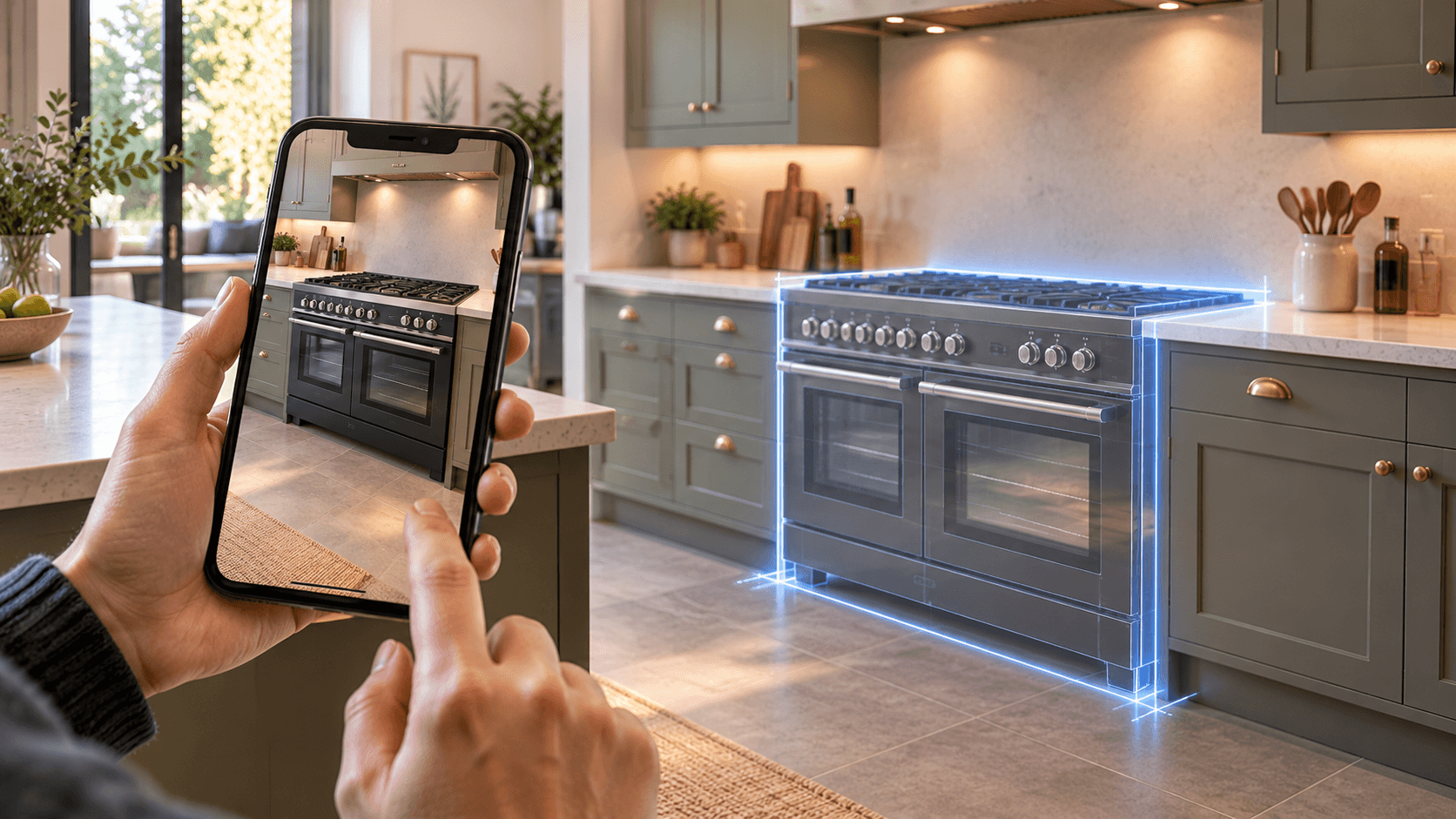
A customer holds up their phone in their own kitchen and stands the range cooker in the gap it has to fill. They see it against their own units, in the finish they chose, at the size it genuinely is — not scaled to fit a product photo.

Fewer returns, and fewer of the expensive ones: the items that come back because they were bigger, darker or bulkier than the picture suggested.

Manufacturing

Machinery on the shop floor, before the order is placed

Footprint, working clearance, door widths and the route in from the loading bay. A buyer can walk around a full-size machine standing on their own concrete and check it against the three things a drawing never quite settles.

Specification errors caught at quotation rather than on delivery day, when the machine is on a lorry and the doorway is still too narrow.

Healthcare

Ward and theatre equipment planning

Imaging units, beds, chairs and trolleys placed in the real bay or treatment room. Clinical teams can check turning circles, access either side of a bed and clearance for a hoist, without a supplier visit or a site survey.

Fewer abortive site visits and fewer procurement decisions reversed after installation, when changes cost the most.

Construction & property

Kitchens, modular buildings and fit-outs in situ

Stand a proposed island unit, cabin or storage system on the actual slab. For developers and specifiers, it turns a plan drawing into something a non-technical client can judge for themselves on the day of the meeting.

Shorter approval cycles, because the client stops asking what it will look like and starts saying yes or no.

Plant hire & logistics

Will it fit through the gate, and into the yard?

Access is the question that wastes most hire deliveries. Let the customer stand the excavator, generator or container in their own entrance and see the clearance before they book it, rather than when the driver arrives.

Fewer failed deliveries and the abortive-charge conversations that follow them.

Signage, print & exhibitions

Signage on the shopfront, stands in the hall

Mount a fascia sign on a client's own building at true size, or set an exhibition stand down on the actual floor space before the hall is built. Scale and sightlines are exactly what these decisions turn on.

Sign-off secured from a single visit, with far less reliance on photo-mockups that flatter the proposal.

Public sector & education

Classroom, lab and public-space planning

Benching, lab equipment, library shelving and street furniture placed in the real space. Committees and governors can see what is being proposed without reading a layout drawing, which not everyone approving the spend can do.

Decisions made with less back-and-forth, and a clear audit trail of what was shown and approved.

Entertainment & events

Staging, marquees and installations in the real venue

Place a stage, rig or marquee on the actual field or floor and walk around it. Sightline and headroom problems show up while they are still cheap to solve, rather than on the morning of the build.

Build-day surprises caught weeks earlier, when the fix is a drawing change rather than a crew standing idle.
How it works

Three steps, and not one of them is “build an app”

01

We build the 3D model

One model per product, built to your real dimensions so it appears at true size. Every colour, finish or configuration you sell is carried inside that single file as a switchable variant.

02

It goes on the page you already have

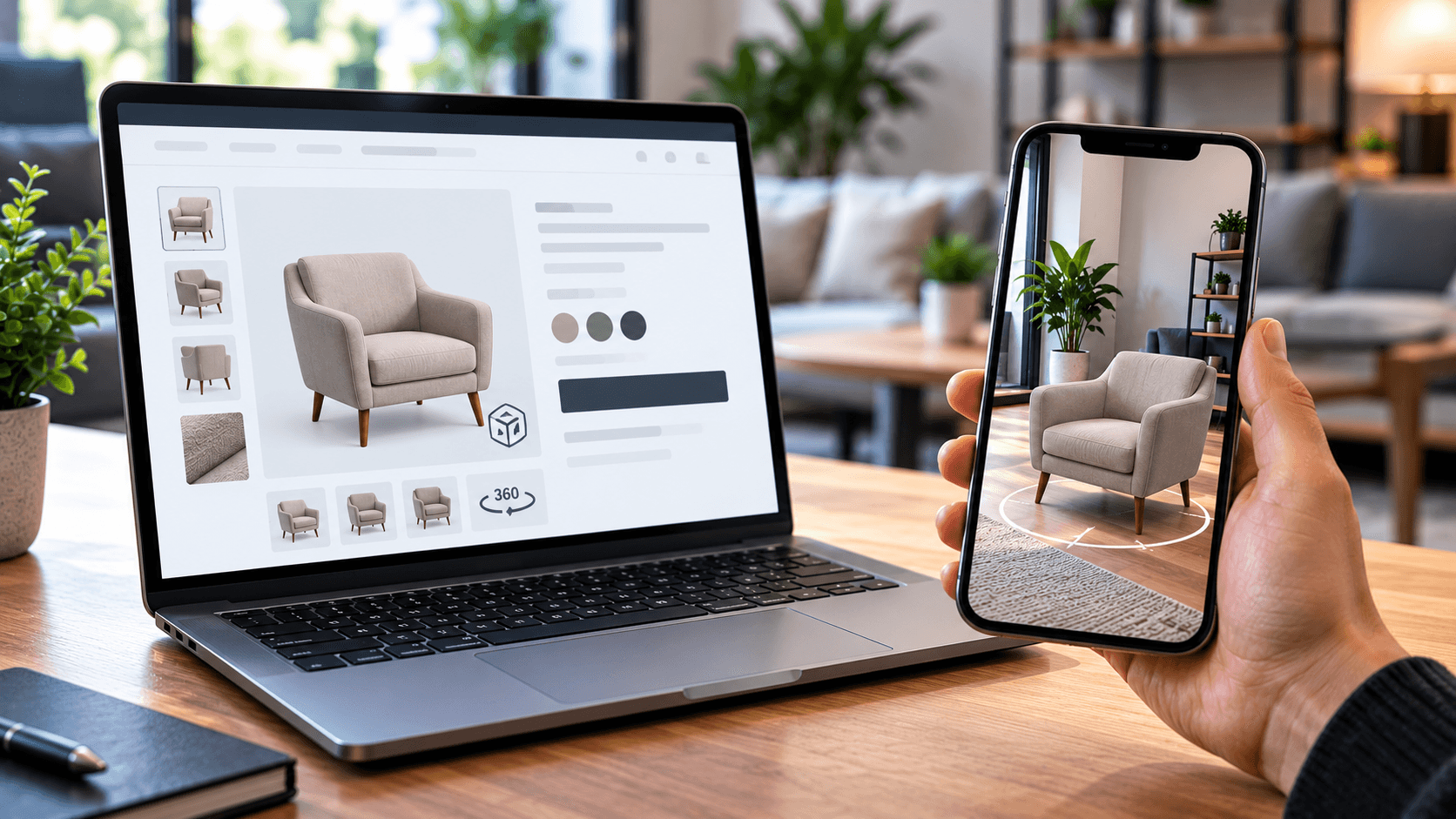
An interactive 3D viewer sits on your existing product page, alongside the photographs. Visitors can turn it, zoom it and change the specification without leaving the page or loading anything new.

03

The phone does the rest

On a mobile, a button hands the model to the AR view built into the operating system — Safari's AR Quick Look on iPhone, Chrome's Scene Viewer or WebXR on Android. The camera opens inside the phone's own AR interface.

Why there is no app, and no app store

Augmented reality stopped being an app feature years ago — Apple and Google both put it into the operating system, reachable from an ordinary web page. That removes the three things that used to kill these projects: the build cost of a native app, the review and release cycle, and the fact that almost nobody installs an app to buy one item. Your customer taps a link on your site and the camera opens. That is the whole journey.

What it takes

The software is free. The 3D models are the real cost.

We would rather say that on the page than at invoice stage. There is no platform licence, no per-view charge and no app to maintain — but every product you want in AR needs a 3D model, and that is where the budget goes. How much depends entirely on what you already have, so it is the first thing we will ask you about.

Cheapest

You already have CAD

If your products are engineered, drawn or manufactured to a spec, the hard part is done. STEP, IGES, SolidWorks, Revit and IFC files all convert. Engineering models carry far more detail than a browser needs, so the work is simplification and materials, not modelling.

What we need: your existing design files.

Usually enough

Built from dimensions

A great many products — cylindrical, symmetrical or assembled from simple forms — can be built accurately from measurements and photographs alone. Dimensionally exact, which is what matters for AR, even without photographic surface detail.

What we need: dimensions, and clear photographs from two or three angles.

Most realistic

Scanned from the real thing

For organic or highly detailed items, photogrammetry captures the real surface. It needs a proper shoot — dozens of overlapping photographs in a full circle — but your own team can do it with a recent phone once we have shown them how.

What we need: twenty minutes with the product, and good light.

Start with one product, not the catalogue

We will always suggest proving it on a single item first — ideally one where size is the thing customers hesitate over. You get a real model on a real page, on real phones, and a clear view of what each additional product costs before committing to a range. If it doesn’t earn its place, you have spent the price of one model finding out.

Works on the site you already have

You do not need to rebuild your website

Almost nobody we work with runs a React site, and none of this requires one. The viewer is hosted here and dropped into your existing site as a single iframe — the same one line whether you are on WordPress, Shopify, Wix or hand-written HTML. Nothing gets installed on your side, and nothing about your current site has to change.

Your AR viewer, embedded here

WordPress

Paste into a Custom HTML block

The whole integration
<iframe
  src="https://www.apaxon.co.uk/ar/embed/philips-34e1c5600he"
  width="100%" height="520" loading="lazy"
  style="border:0;border-radius:12px"
  allow="xr-spatial-tracking; camera"
  title="View in 3D and AR"></iframe>
  • No plugin, no account, no per-view fee. The AR itself is a feature of the phone’s operating system.
  • It loads nothing until someone taps it, so it will not slow the page it sits on.
  • We host and update the model. Change the product and the embed updates everywhere it is pasted, with nothing to redeploy.

Questions

The things people ask before they commit

Do our customers need to download an app?

No. Augmented reality is built into both mobile operating systems and reachable from a normal web page. On an iPhone it opens through Safari's AR Quick Look; on Android through Chrome. Your customer taps a button on your website and the camera opens — there is no app, no store listing and no install step.

Which devices can use it?

Most iPhones and iPads from 2015 onward, and Android devices that support Google Play Services for AR. Devices that cannot run AR still get the interactive 3D viewer, so nobody is shown a broken button — including desktop visitors, who are often the majority of your traffic.

What does augmented reality actually cost?

The software is free and open source, and the AR itself is a feature of the operating system, so there is no licence fee and no per-view charge. The real cost is producing the 3D models, and that varies enormously depending on whether you already hold CAD data, whether the product can be modelled from dimensions, or whether it needs scanning. We will give you a figure per product once we know which of those applies.

We already have CAD models of our products. Can you use those?

Usually yes, and it is the cheapest route by a wide margin. STEP, IGES, SolidWorks, Revit and IFC files all convert to web-ready 3D. Engineering models carry far more detail than a browser needs, so the work is simplification and materials rather than modelling from scratch. If you manufacture what you sell, the expensive part is very likely already sitting on your server.

Can customers change the colour or specification in AR?

Yes. A single model can carry every finish, colour or configuration as a switchable variant, and the option the customer selects on the page is carried into the AR session rather than reverting to a default. One file, every version you sell.

Does it work outdoors and on difficult surfaces?

Yes, with a caveat worth knowing before you commit. Both AR systems find a flat surface by looking for visual detail, so patterned flooring, gravel and textured ground work well, while wet uniform paving, plain carpet and flat lawn in dull light are harder — the phone simply has less to lock onto. We design the on-screen guidance around that rather than pretending it does not happen.

How is this different from a 360-degree product spinner?

A spinner shows the product from every angle but always at the size of your web page. AR puts it in the customer's own room or yard at its true physical size, next to their own furniture, doorways and vehicles. The question it answers is not what does it look like but will it fit — and that is the question that stalls expensive purchases.

How long does it take to add to our website?

The website integration is typically a few days for the first product, and considerably less for each one after it, because the viewer is built once and reused. The timeline is nearly always governed by how quickly the 3D models can be produced, not by the development work.

Pick one product. Let’s see what it does.

The fastest way to judge this is on something you actually sell, on your own website, opened on your own phone. Tell us about one product where customers hesitate over size or finish, and we will tell you exactly what a model for it involves.

Any CAD or design files you already hold
The product’s real dimensions
The finishes or options you sell it in

Apaxon® Limited — Manchester, serving the UK.

Apaxon® Store

We supply the hardware as well

Most people who find us through our services never discover the store — and it is the same business. Servers, networking, workstations and components, sourced through the same distribution partnerships that sit behind everything else we do.

  • Brand new stock only
  • No minimum order
  • Next-working-day UK delivery
Insights & News

Stay Up to Datewith the Latest Thinking

Expert guides, sector insights and technology news from the Apaxon® team.

All Resources