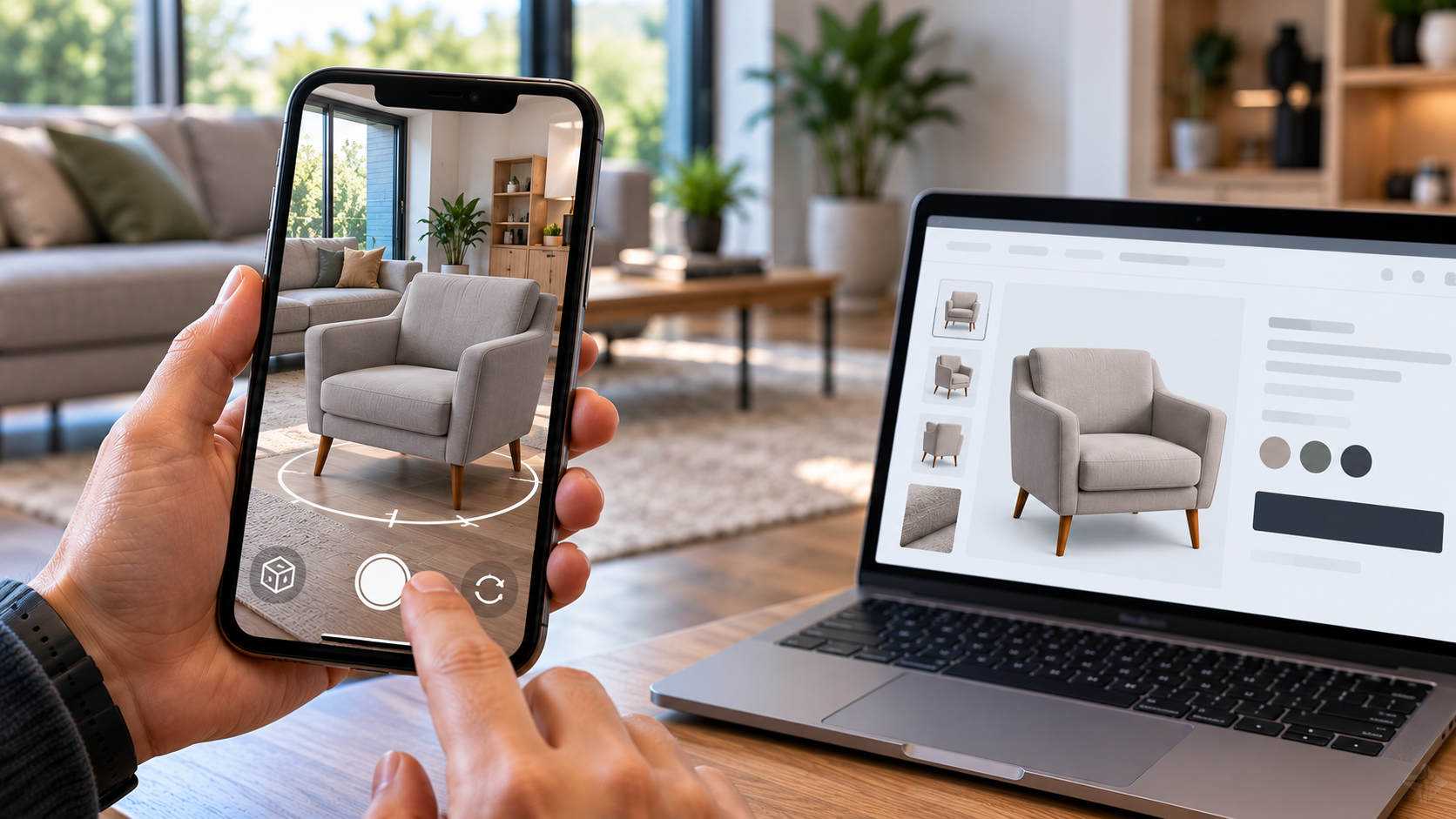
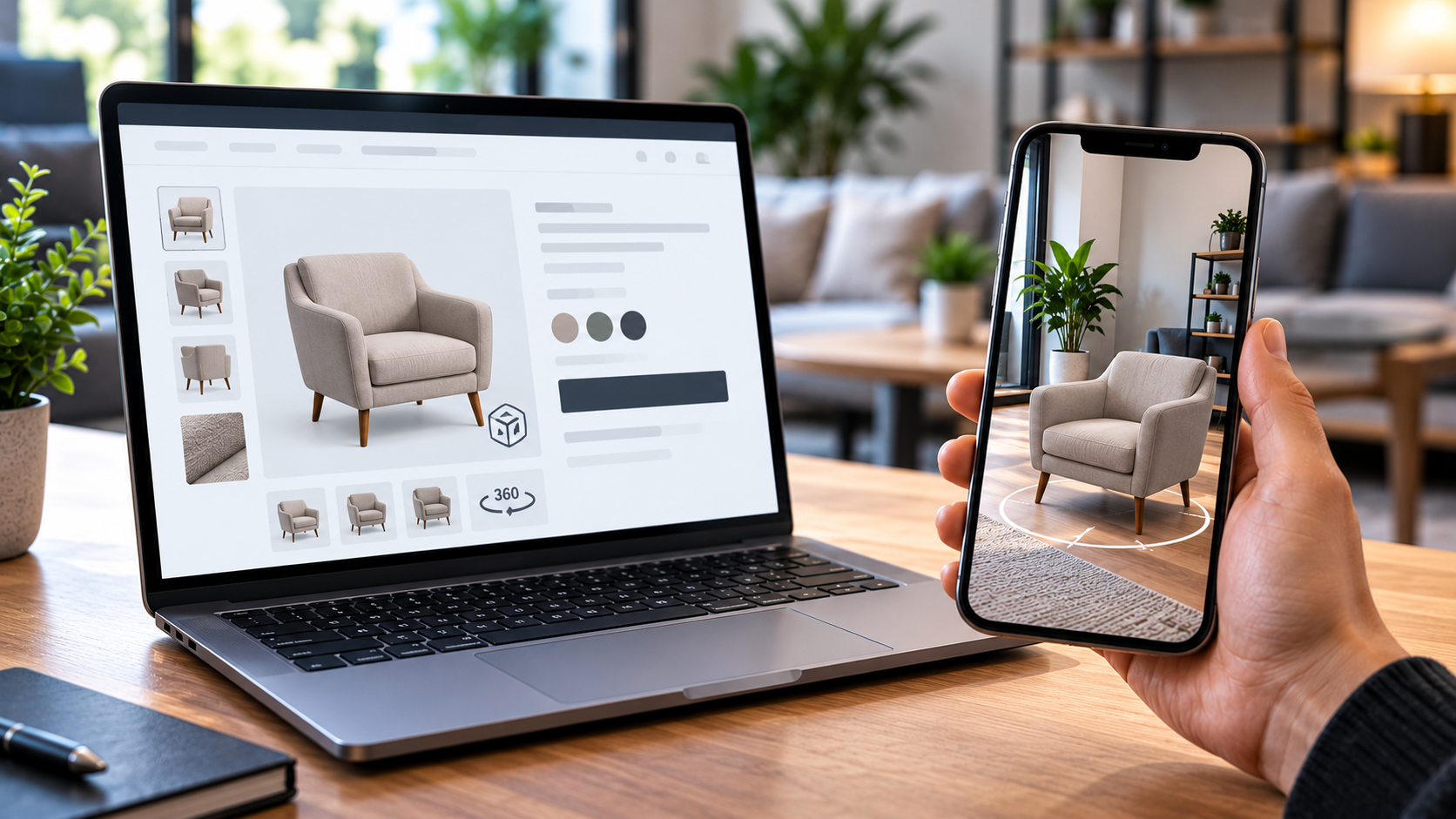
The cost of augmented reality is not the software or the website work. It is producing a 3D model of each product. Which is why, for any business that engineers or manufactures what it sells, the economics are completely different from the ones in the quotes you may have seen.
You probably already own the expensive part
If your products are designed, drawn or manufactured to a specification, a dimensionally accurate 3D model of them already exists. It is in your CAD system. Converting it for the web is a fraction of the cost of modelling the same product from scratch, and it is the cheapest route into AR by a wide margin.
These formats all convert to web-ready 3D:
- STEP and IGES — the neutral interchange formats most engineering software exports;
- SolidWorks native files;
- Revit and IFC, for building products, modular structures and fit-out components.
What actually happens to the file
The job is not modelling. It is reduction.
An engineering model is built to be manufactured from. It contains every fastener, thread, internal bracket and tolerance, because a machine shop needs all of it. A browser needs none of it. A model that opens in seconds on a phone over mobile data is a model that has had everything invisible to the customer removed, and realistic surfaces added in its place.
So the work breaks down as:
- Simplification. Internal geometry, hidden assemblies and fastener detail come out. Silhouette and visible surfaces stay exactly as drawn.
- Materials. CAD files describe shape, not appearance. Powder-coat, brushed stainless, oak veneer, glass and painted finishes are authored so the product looks like the thing you ship.
- Variants. Every colour, finish and configuration you sell is carried inside the single file as a switchable option.
Dimensional accuracy is the part that cannot slip
In ordinary product photography, close enough is fine. In AR it is not, because the entire value of the thing is that the customer is checking whether it fits. A model that is five per cent small is worse than no model at all — it will tell somebody their machine clears a doorway that it does not clear.
This is the strongest argument for starting from CAD rather than from photographs: the dimensions are not being estimated, they are being inherited from the file the product is built from.
One file, every version you sell
A single model can carry every finish, colour or configuration as a switchable variant, and whatever the customer selects on the page is carried into the AR session rather than reverting to a default. For a manufacturer with a range built from common components, this is where the cost per product drops sharply: the tenth variant of a model you already have is not a tenth model.
If there is no CAD file
Plenty of products were never drawn, or the drawings are long gone. There are two other routes, and both are ordinary rather than exotic:
| Route | Suits | What is needed |
|---|---|---|
| Built from measurements | Cylindrical, symmetrical or simply assembled products | Dimensions, and clear photographs from two or three angles |
| Photogrammetry scan | Organic or highly detailed items | Twenty minutes with the product, good light, and dozens of overlapping photographs in a full circle |
A great many products can be built accurately from measurements and photographs alone — dimensionally exact, which is what AR requires, even without photographic surface detail. The scanning route needs a proper shoot, but it is something your own staff can do with a recent phone once they have been shown how. The cost of each route is set out in what augmented reality actually costs a business.
What to send to get a figure
For a per-product price, the useful things to share are: the CAD format you export, how many products you want to start with, how many finishes or configurations each one has, and whether the range shares components. That is usually enough to say which route applies and what it costs.
Apaxon converts CAD to web-ready 3D and builds the AR and 3D viewers that display it, including live demonstrations you can try yourself. If your products are already drawn, send over a sample file and we will tell you what it would take.
Get the latest IT insights
Expert tips, infrastructure news, and product updates — delivered weekly.